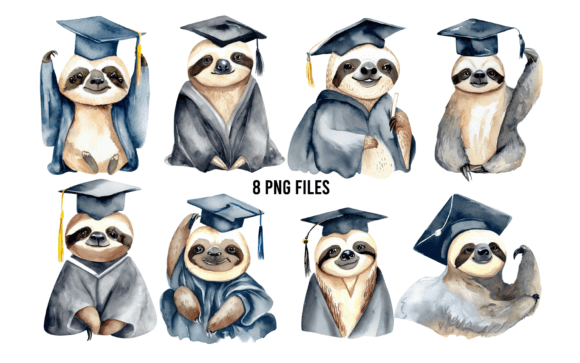
Sloth Graduate Watercolor Clipart Review
As a designer who has spent years turning digital assets into tangible, stitched masterpieces, I approach every new download with a mix of excitement and skepticism. You never know if a pretty picture will actually translate well to thread until it hits the hoop. Recently, I was evaluating the Sloth Graduate Watercolor Clipart set for a potential client project involving custom graduation gifts. My goal was simple: determine if this graphic could stand up to the rigors of real-world machine embroidery or if it would remain just another pretty image in a folder.
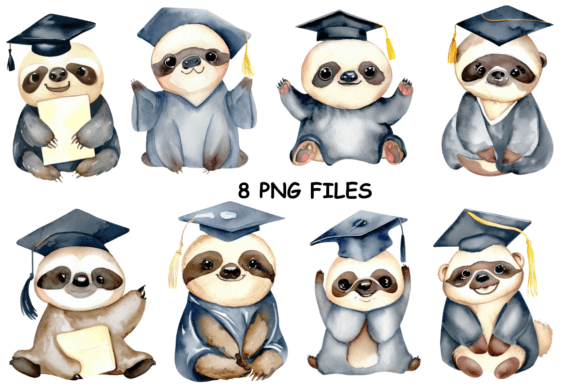
The first thing that strikes you about the Sloth Graduate Watercolor Clipart is its mood. It isn't stiff or overly rigid; it carries a soft, whimsical energy that feels perfect for celebrating milestones without being too formal. The watercolor aesthetic suggests a gentle touch, which is exactly what you want when designing for baby items, tote bags, or holiday gifts. However, watercolor is notoriously tricky in embroidery because the medium relies on subtle gradients and bleeding edges that thread simply cannot replicate perfectly. So, how does it hold up?
From Screen to Stitch: A Real-World Test Scenario
Let's imagine a concrete scenario. You are an Etsy seller preparing a batch of personalized sweatshirts for a university graduation party. Your customer wants something unique that captures the spirit of "slow and steady wins the race," but they also need it to look professional enough to command a higher price point. This is where the Sloth Graduate Watercolor Clipart comes into play.
In theory, the design offers eight separate PNG files with transparent backgrounds, which gives you incredible flexibility. You aren't stuck with one rigid composition. You can isolate the sloth character, the mortarboard, or the watercolor wash elements and arrange them however you see fit. For a sweatshirt, I would likely place the full character on the chest area, using the watercolor splash as a background element behind the text. On a smaller item, like a coffee mug or a tea towel, the isolated sloth head might be more impactful.
When I visualized the stitching process, I immediately thought about the stitch types required. The solid outlines of the sloth and cap would benefit from a tight satin stitch to give definition, while the watercolor washes would need to be interpreted as fill stitches or perhaps even applique work to capture that soft, blended look. If you try to force a high-density fill stitch over a large watercolor gradient, you risk puckering the fabric. The key here is knowing when to simplify. The Sloth Graduate Watercolor Clipart works best when you treat the watercolor effect as a stylistic suggestion rather than trying to stitch every single color shift.
Where This Design Shines in Custom Apparel
This design is a natural fit for products that require a touch of personality and warmth. I have seen similar graphics succeed brilliantly on aprons for home bakers, pillow covers for nurseries, and even patches for denim jackets. The theme of graduation lends itself perfectly to milestone celebrations, making it a versatile asset for small business owners looking to expand their catalog.
For crafters selling at local markets, the Sloth Graduate Watercolor Clipart offers a distinct advantage: it looks handmade. In a sea of generic, bold vector clipart, the watercolor style stands out. Customers often associate this softer look with higher quality and more thoughtful craftsmanship. When used on a tote bag design, the design invites the owner to carry it with pride, knowing it represents a personal achievement.
However, not all fabrics are created equal. If you plan to use this on stretchy fabric like a jersey t-shirt, you must be cautious. The watercolor elements, if rendered with too much detail, might distort when the fabric stretches. For these applications, I recommend focusing on the core character and minimizing the background wash. Similarly, if you are working on dark fabric, the lightness of the watercolor colors might get lost unless you use a high-quality underlay or a contrasting thread color. Always test your thread colors against the fabric swatch before committing to a full run.
Pitfalls to Avoid with Delicate Graphics
While the Sloth Graduate Watercolor Clipart is charming, there are specific situations where it might struggle. Small hoop sizes are the enemy of detailed watercolor designs. If you attempt to stitch this on a 4x4 inch hoop, the fine details of the watercolor texture will likely disappear or merge into a muddy blob. In such cases, it is better to scale the design down to focus on the silhouette of the sloth and the hat, ignoring the wash entirely.
Textured fabrics present another challenge. If you are embroidering onto a rough linen or a heavily textured canvas, the stabilizer needs to be robust enough to prevent the needle from dragging the fabric. Without proper support, the delicate lines of the design could warp. Additionally, avoid placing dense stitch areas near the edges of curved surfaces like caps or fitted hats. The curvature can cause the design to bunch up, ruining the clean look of the graduation theme.
Another critical consideration is the longevity of the finished product. Items that require frequent washing, such as kitchen towels or baby clothes, need to withstand friction. If the design includes tiny, intricate details that rely on thin threads, they may fray over time. For commercial embroidery projects intended for mass production, it is wise to simplify the design slightly to ensure durability without losing the charm of the original illustration.
Practical Designer Notes for Success
If you are ready to bring the Sloth Graduate Watercolor Clipart to life, here is my checklist for ensuring a professional result:
- Test on Scrap Fabric: Never cut into your final garment without a test run. Use scrap fabric that matches the weight and texture of your final product to check for puckering and tension issues.
- Check Thread Contrast: Ensure your chosen thread colors pop against the fabric. Light watercolor tones often need a darker outline or a contrasting background to maintain visibility.
- Review Stitch Density: High density can ruin the flow of a watercolor design. Opt for lighter fill densities to preserve the soft aesthetic.
- Confirm Hoop Size: Match your design size to the available hoop space. If the design is too large, consider splitting it or reducing the scale.
- Inspect Small Details: Zoom in on the file to ensure no critical details are so small they won't stitch well.
- Test Black and White Mockups: Convert your design to grayscale to see how the values interact. If the contrast is too low, the design will lack impact.
- Use Proper Stabilizer: For delicate fabrics, use tear-away or cut-away stabilizers appropriate for the weight of the material to prevent distortion.
- Verify Licensing: Before selling finished items or digital products, double-check the license terms provided with the download to ensure you have the right to use the Sloth Graduate Watercolor Clipart commercially.
The Sloth Graduate Watercolor Clipart is a fantastic addition to any library of design assets for creative entrepreneurs. It bridges the gap between digital art and physical craft with ease, provided you respect the limitations of the medium. Whether you are creating a personalized gift for a friend or building a line of boutique products, this design has the potential to elevate your brand and delight your customers.
Ultimately, the success of an embroidery project lies in the preparation and the eye of the designer. By understanding where the design fits best and where caution is needed, you can turn a simple graphic into a cherished keepsake. Take your time, test your setup, and let the whimsical nature of the sloth guide your creative choices. With the right approach, the Sloth Graduate Watercolor Clipart can become a standout piece in your portfolio of handmade products.